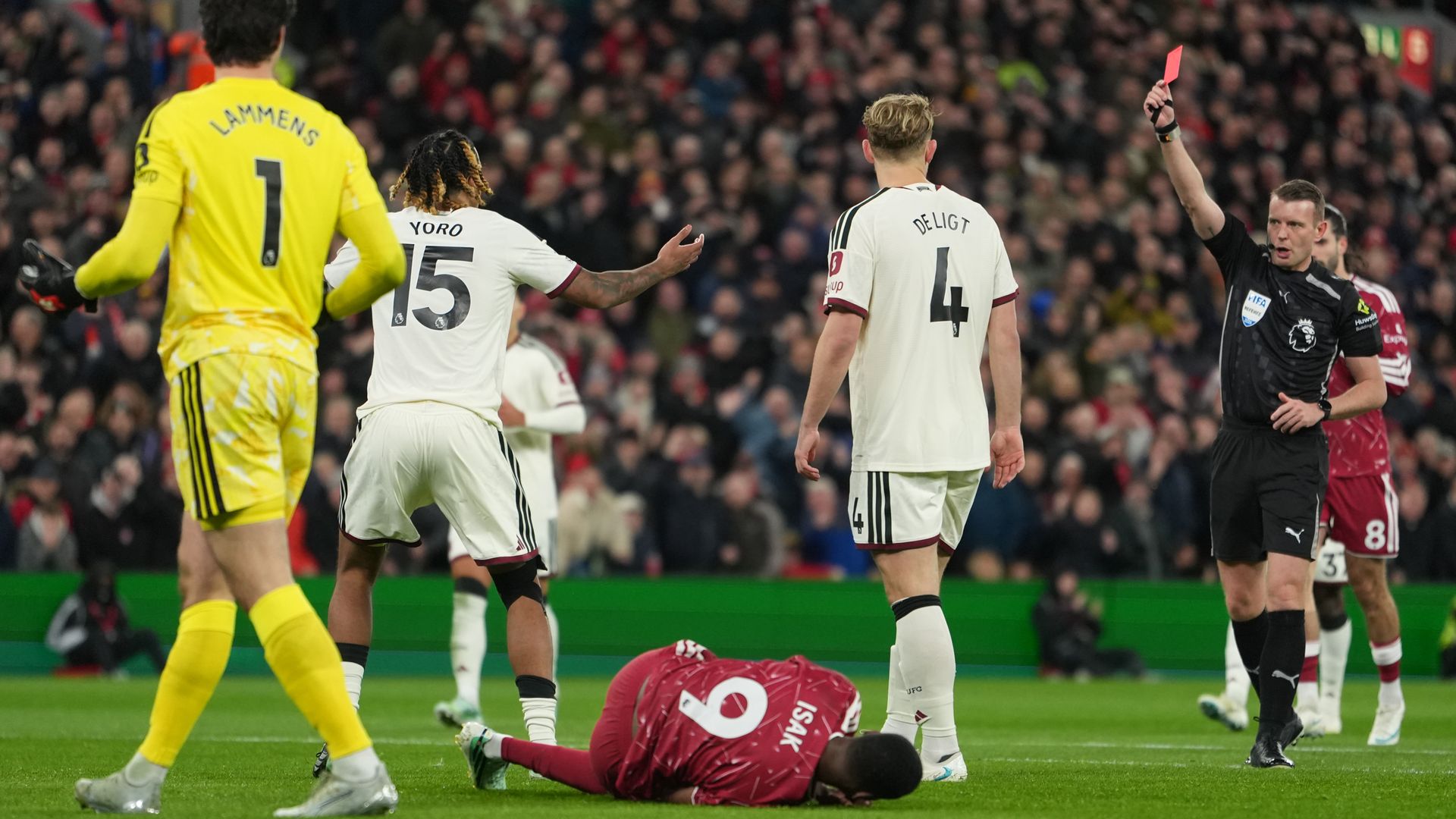
Leny Yoro's red card from the match against Liverpool was overturned, but the referees' chief insisted the officials and VAR had handled the incident properly.
Manchester United wins appeal of Leny Yoro's red card, but Howard Webb defends referee process and VAR carries wider implications for the teams, players, and competition context discussed in this report.
Key Points
Manchester United's red card appeal won.
Manchester United's appeal was upheld and Leny Yoro's red card against Liverpool was revoked.
Man Utd win Yoro red card appeal - but Webb backs referee and VAR process.
Manchester United's appeal against Leny Yoro's red card against Liverpool has been upheld, resulting in his dismissal being overturned. Despite the decision on appeal, Howard Webb, chief of referees, insisted that the process of the officials during the game and the VAR in investigating the incident was correct and proper.
According to the statement, Webb insists that the on-field referee and the VAR followed the prescribed steps and criteria in reviewing possible serious infringements. He pointed out that there is a clear process and protocol that officials follow—from immediately identifying an in-game incident to VAR review using available angles and video evidence. He added, the reversal of the decision on appeal does not automatically mean that the process was wrong; it is part of a total system where there is a separate and independent review after the match.
For Manchester United, this is an important result as it removes any pending suspension and Yoro will be available again for the team's next matches. It is a huge relief to United's defense and adds an option for the coaching staff, especially in the busy weeks of the Premier League calendar.
Appeals in England generally go like this: teams can challenge a "wrongful dismissal" or wrongful sending off by submitting evidence to the relevant committee. If it is determined that the action should not have resulted in a red card, the penalty is revoked and the player's record is cleared.
The different outcomes within the pitch and the appeal process naturally sparked discussion among supporters and followers. For some, it's a question of consistency; for others, it is proof that checks and balances work in the officiating process. On the referees' side, Webb emphasizes that the main goal is getting the right decision based on the best information at the time, while also providing a mechanism for post-match review where more time and materials are reviewed.
Ultimately, the balance between quick decisions in the actual game and thorough post-match assessment remains central to the discussion. Yoro's case is another reminder that there is an underlying process to correct inconsistencies, and that Premier League teams—such as Manchester United and Liverpool—have to navigate this system as they continue to fight for every point in tough competition.
What's next
The next phase should bring official updates, squad decisions, and a clearer picture of what this means on the pitch.